Zenobius 1.30
Adrastean Nemesis
English
Proverb
Adrastean Nemesis
Explanation
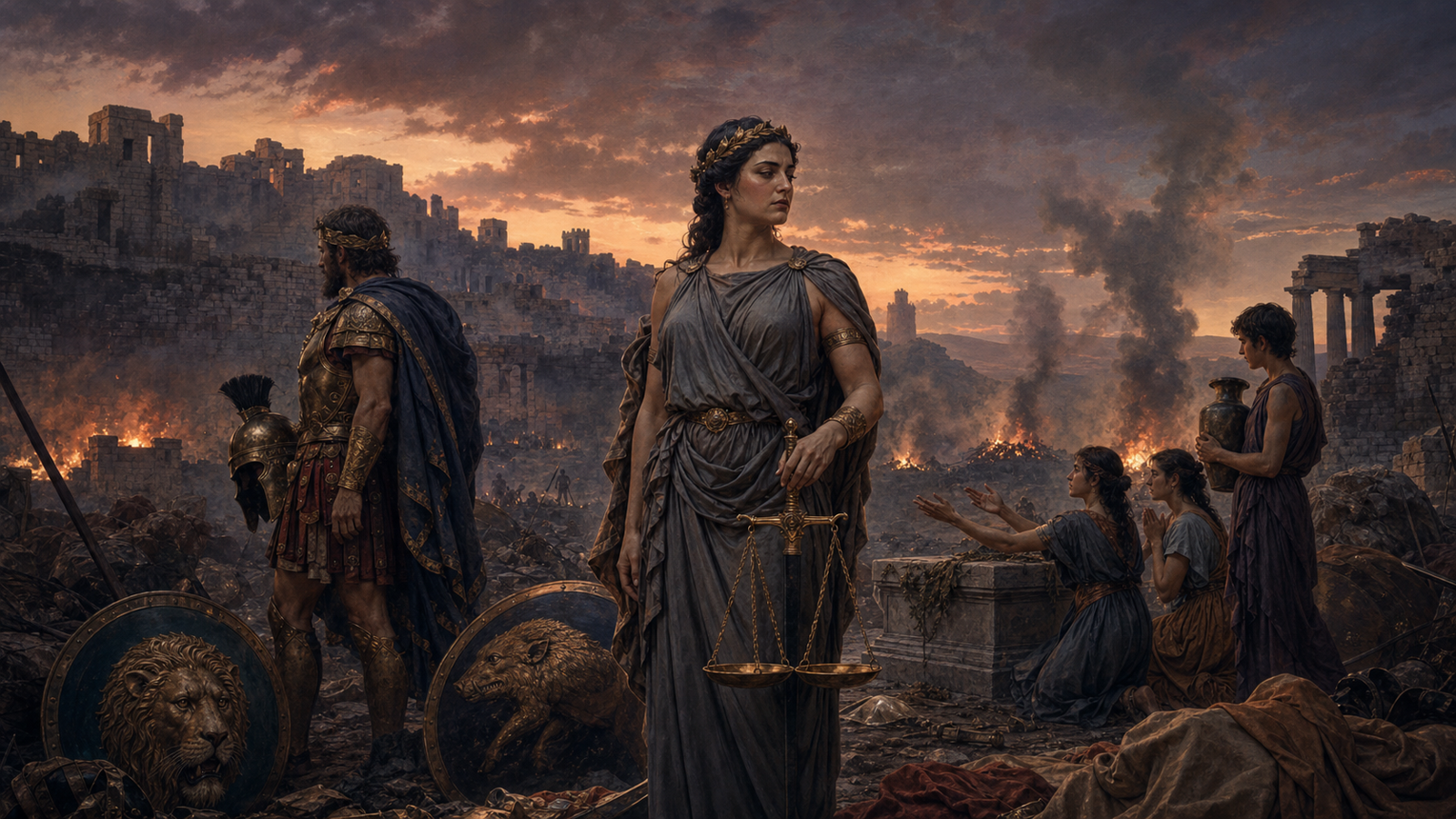
from Adrastus; applied to those once prosperous and afterwards unfortunate. For Eteocles and Polynices, after the destruction of their father Oedipus, having received the kingship of Thebes, made a compact with each other concerning it: it seemed good to them that each should rule alternately for a year, and so exchange the kingship year by year. Eteocles ruled first; and being unwilling to hand over the kingdom to his brother when the time had passed, Polynices was driven into exile. Coming to Argos, he approached the palace of Adrastus by night, and chancing there upon Tydeus — who was fleeing from Calydon for a murder he had done — they came to blows. At their cries Adrastus appeared and parted them. Remembering an oracle that bade him yoke his daughters to a boar and a lion, he chose them both as his sons-in-law; for the one bore on his shield the forepart of a lion, the other of a boar. He promised, then, to restore them both to their own fatherlands. He campaigned first against Thebes, where, after the best of the Argives had fallen, Adrastus alone escaped. When the Thebans cast forth their corpses unburied and refused them burial, the sons of the slain fled to the altar of Pity and demanded the bodies. The Athenians took the field, and the corpses were given up. At that time Evadne, wife of Capaneus, threw herself on the pyre and was burnt with her husband's body. Some time later the sons of the lost Argives marched against Thebes to avenge their fathers' deaths. When Tiresias the seer prophesied that victory for the Thebans depended on the Argives' [escape], they devised a stratagem: they sent envoys to the Argives, but themselves abandoned the city by night and went off as fugitives. The Argives, then, entered the city, threw down its walls, and gathered the spoil. Whence the proverb came to be applied to those who do unjust deeds and yet do not escape justice.
Greek
Proverb
Ἀδράστεια Νέμεσις
Explanation
ἀπὸ Ἀδράστου· τάττεται δὲ ἐπὶ τῶν πρότερον μὲν εὐδαιμονησάντων, ὕστερον δὲ δυςτυχησάντων.
Ἐτεοκλῆς γὰρ καὶ Πολυνείκης μετὰ τὴν ἀπώλειαν τοῦ ἰδίου πατρὸς Οἰδίποδος τὴν βασιλείαν Θηβῶν παραλαβόντες, περὶ ταύτης συντίθενται πρὸς ἀλλήλους, καὶ αὐτοῖς δοκεῖ τὸν ἕτερον παρ’ ἐνιαυτὸν ἄρχειν, καὶ οὕτως κατ’ ἔτος τὴν βασιλείαν ἀμείβεσθαι. Ἄρξαντος οὖν Ἐτεοκλέους καὶ μὴ βουλομένου τῷ ἀδελφῷ τὴν βασιλείαν παραδοῦναι μετὰ τὴν τοῦ χρόνου παρέλευσιν, Πολυνείκης ἐφυγαδεύθη, καὶ πρὸς Ἄργος ἀφικόμενος τοῖς τοῦ Ἀδράστου βασιλείοις προςεπέλασε νύκτωρ, καὶ προςτυχὼν ἐκεῖσε τῷ Τυδεῖ φεύγοντι ἐκ Καλυδῶνος δι’ ὃν εἰργάσατο φόνον, συνάπτει μάχην. Γενομένης δὲ βοῆς Ἄδραστος ἐπιφανεὶς τούτους διέλυσε. Καὶ λογίου τινὸς ἀναμνησθεὶς λέγοντος αὐτῷ, κάπρῳ καὶ λέοντι τὰς θυγατέρας συζεῦξαι, ἀμφοτέρους εἴλετο νυμφίους· εἶχον γὰρ ἐπὶ τῶν ἀσπίδων ὁ μὲν προτομὴν λέοντος, ὁ δὲ κάπρου. Ὑπέσχετο οὖν καὶ ἀμφοτέρους εἰς τὰς ἰδίας ἀποκαταστῆσαι πατρίδας. Καὶ πρῶτον ἐπὶ Θήβας στρατεύει, ἔνθα τῶν ἀρίστων Ἀργείων πεσόντων μόνος διέφυγεν Ἄδραστος. Τοὺς δὲ νεκροὺς αὐτῶν ἀτάφους τῶν Θηβαίων ῥιψάντων καὶ μὴ διδόντων ταφῇ, οἱ τῶν ἀποθανόντων παῖδες πρὸς τὸν τοῦ Ἐλέου καταφυγόντες βωμὸν τοὺς νεκροὺς ἐξῄτουν. Ἀθηναίων δὲ στρατευσάντων, οἱ νεκροὶ δἴδονται. Ὅτε καὶ Εὐάδνη ἡ τοῦ Καπανέως γυνὴ ἑαυτὴν τῇ πυρᾷ βαλοῦσα τῷ τοῦ ἀνδρὸς συγκατκαύθη νεκρῷ. Μετὰ δὲ χρόνους οἱ τῶν ἀπολομένων Ἀργείων παῖδες ἐπὶ Θήβας ἐστρατεύσαντο, τὸν τῶν πατέρων θάνατον βουλόμενοι τιμωρήσασθαι. Τειρεσίου δὲ τοῦ μάντεως θεσπίσαντος Θηβαίοις τὴν νίκην ἐπ’ Ἀργείοις κεῖσθαι, δρασμὸν ἐπενόησαν· καὶ στέλλουσι μὲν πρέσβεις πρὸς Ἀργείους, αὐτοὶ δὲ νυκτὸς τὴν πόλιν καπαλιπόντες, φυγάδες ᾤχοντο. Εἰςίασιν οὖν εἰς τὴν πόλιν Ἀργεῖοι, καὶ τὰ ταύτης τείχη καθελόντις τὴν λείαν συνήθροισαν. Ὅθεν ἡ παροιμία προήχθη λέγεσθαι ἐπὶ τῶν ἄδικα διαπραττομένων καὶ τὴν δίκην μὴ ἐκφευγόντων.
urn:cts:greekLit:tlg0098.tlg001.1st1K-grc1:1.30