Zenobius 1.33
A burning robe
English
Proverb
A burning robe
Explanation
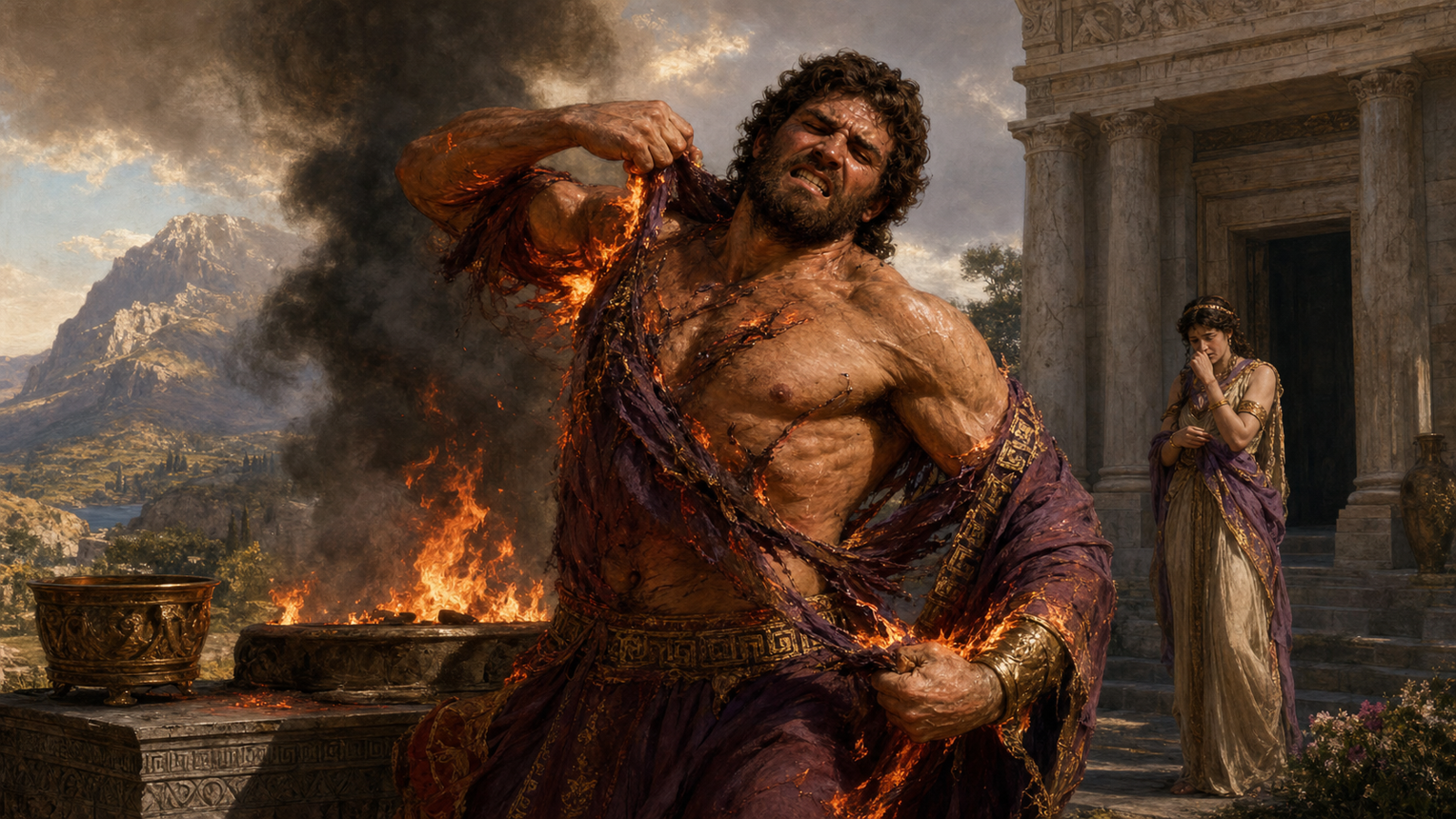
of those who kindle, ruin, and stir up slanders. Said because Deianira sent Heracles a robe by which he was burnt up and destroyed. For when Heracles had defeated the Centaurs, one of them named Nessus escaped and came to the river Evenus, where he settled and ferried passers-by across. Now Heracles, on his way to Ceyx in Trachis, came [there] together with Deianira. Heracles himself crossed the river; but being asked his fee, he ordered Nessus to ferry Deianira over. As Nessus was conveying her, he tried to ravish her; she cried out, and Heracles, hearing her, shot Nessus through the heart. Dying, Nessus called Deianira and told her that, if she wished to have a love-charm to keep Heracles' affection, she should mop up the blood that flowed from the arrow's wound. She did so and kept it by her. Heracles, having reached Trachis and from there campaigned against Oechalia, took the city. Plundering it, he led Iole captive. Being about to make a thank-offering to Zeus, he sent to Deianira asking for a splendid robe. Deianira, learning what had passed about Iole, and fearing he would love her more, supposing the blood of Nessus to be in truth a love-charm, anointed the tunic with it. Heracles put it on and proceeded to sacrifice. But when, the tunic being warmed, the Hydra's poison began to take hold of his flesh, he tried to tear off the tunic, which clung to his body; and his flesh was torn off with it. Held by such a calamity, Heracles was conveyed to Trachis to Deianira. She, perceiving what had happened, hanged herself. Heracles, having charged Hyllus — his eldest son by Deianira — to marry Iole, came to Mount Oeta, where he heaped up a pyre, mounted it, and bade them set it alight. None of his companions being willing to do it, Poeas, passing by in search of his flocks, set fire to the pyre; and to him Heracles gave his bow. As the pyre burnt, it is said that a cloud came up from below and with a thunderclap sent him up to heaven.
Greek
Proverb
Αἰθὴς πέπλος
Explanation
ἐπὶ τῶν ὑπεκκαιόντων καὶ φθειρόντων καὶ διαβολὰς ποιούντων· εἴρηται δὲ παρόσον ἡ Δηϊάνειρα πέπλον ἔπεμψεν Ἡρακλεῖ, ὑφ’ οὗ καυθεὶς ἐφθάρη.
Ἡρακλέους γὰρ τοὺς Κενταύρους καταπολεμήσαντος, εἷς ἐξ αὐτῶν Νέσσος ὀνομαζόμενος διαφυγὼν ἧκεν ἐπὶ ποταμὸν Εὔηνον, ἐν ᾧ καθεζόμενος τοὺς παριόντας διεπόρθμευεν. Ἀπερχόμενος δὲ Ἡρακλῆς πρὸς Κήϋκα εἰς Τραχῖνα ἧκε † μεθ’ ἑαυτοῦ καὶ Δηϊάνειραν. Αὐτὸς μὲν οὖν Ἡρακλῆς τὸν ποταμὸν διῄει· Δηϊάνειραν δὲ μισθὸν αἰτηθεὶς, ἐκέλευε Νέσσῳ διακομίζειν. Ὁ δὲ διαπορθμεύων ἐπεχείρει βιάζεσθαι· τῆς δὲ ἀνακραγούσης αἰσθόμενος Ἡρακλῆς ἐτόξευσε Νέσσον εἰς τὴν καρδίαν. Οὗτος δὲ μέλλων τελευτᾶν προςκαλεσάμενος Δηϊάνειραν εἶπεν, εἰ θέλοι φίλτρον πρὸς Ἡρακλέα ἔχειν, τὸ ῥυὲν ἐκ τοῦ τραύματος τῆς ἀκίδος αἷμα ἐκμάξασθαι. Ἡ δὲ ποιήσασα τοῦτο, ἐφύλαττε παρ’ ἑαυτῇ. Ἀπελθὼν οὖν Ἡρακλῆς εἰς Τραχῖνα, κἀκεῖθεν στρατευσάμενος ἐπὶ τὴν Οἰχαλίαν, τὴν πόλιν αἱρεῖ. Καὶ ληΐσας ταύτην, ἦγεν Ἰόλην αἰχμάλωτον. Μέλλων δὲ τῷ Διὶ χαριστήρια θύειν, ἔπεμψε πρὸς Δηϊάνειραν λαμπρὰν ἐσθῆτα ζητῶν. Μαθοῦσα δὲ Δηϊάνειρα τὰ περὶ τὴν Ἰόλην, καὶ δείσασα μὴ ἐκείνην μᾶλλον ἀγαπήσῃ, νομίσασα ταῖς ἀληθείαις φίλτρον εἶναι τὸ ῥυὲν αἷμα Νέσσου, τούτῳ τὸν χιτῶνα ἔχρισεν. Ἐνδυσάμενος οὖν Ἡρακλῆς ἔθυεν. Ὡς δὲ θερμανθέντος τοῦ χιτῶνος ὁ τῆς ὕδρας ἰὸς τοῦ χρωτὸς καθήπτετο, τὸν χιτῶνα ἀπέσπα προςπεφυκότα τῷ σώματι. συναπεσπῶντο δὲ καὶ αἱ σάρκες αὐτοῦ. Τοιαύτῃ συμφορᾷ κατασχεθεὶς Ἡρακλῆς, εἰς Τραχῖνα πρὸς Δηϊάνειραν κομίξεται. Αὕτη μὲν οὖν αἰσθομένη τὸ γεγονὸς ἑαντὴν ἀνήρτησεν. Ἡρακλῆς δὲ ἐντειλάμενος Ὕλλῳ, ὃς ἦν ἐκ Δηϊανείρας αὐτῷ παῖς πρεσβύτερος, Ἰόλην γῆμαι, παρεγένετο εἰς Οἴτην ὄρος, ἔνθα πυρὰν ἔνησεν, ἧς ἐπιβὰς, ὑφάπτειν ἐκέλευσε. Μηδενὸς δὲ τῶν σὺν ἐκείνῳ τοῦτο πράττειν ἐθέλοντος, Ποίας παριὼν κατὰ ζήτησιν ποιμνίων, τὴν πυρὰν ὑφῆψεν· καὶ τούτῳ τὰ τόξα Ἡρακλῆς ἐδωρήσατο. Καιομένης δὲ τῆς πυρᾶς, λέγεται νέφος ὑποστὰν μετὰ βροντῆς αὐτὸν εἰς οὐρανὸν ἀναπέμψαι.
urn:cts:greekLit:tlg0098.tlg001.1st1K-grc1:1.33