Zenobius 1.41
The cap of Hades
English
Proverb
The cap of Hades
Explanation
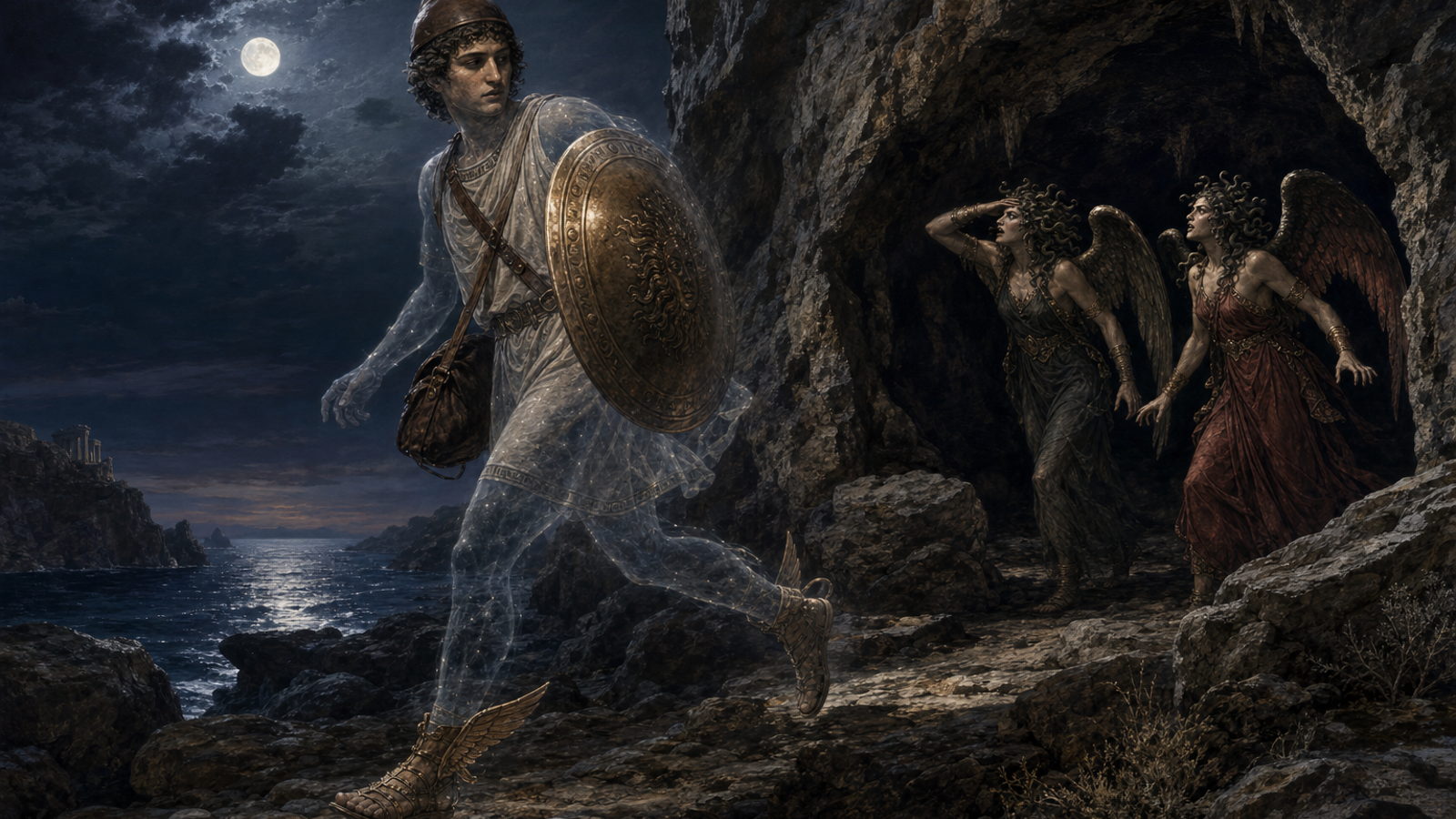
against those who hide themselves by sundry contrivances. Such was the cap of Hades, by use of which Perseus cut off the head of the Gorgon. The story is as follows. When Acrisius was consulting the oracle about male offspring, the god told him that a son would be born from his daughter who would kill him. Fearing this, Acrisius built a bronze chamber underground and there kept guard over his daughter Danae. Zeus fell in love with her, and, transformed into gold, flowed through the roof into her lap. When Acrisius perceived that Perseus had been born of her, he cast her with the boy in a chest into the sea. The chest drifted to the island of Seriphus, where Dictys took it up and reared Perseus. Polydectes, brother of Dictys, who was king of Seriphus, fell in love with Danaë, and, since Perseus had now grown up and he could not consummate his love, he summoned his friends — among them Perseus — saying he was holding a bridal shower for the wedding of Hippodamia daughter of Oenomaus. When Perseus said he would not gainsay him even the head of the Gorgon, he asked horses from the others; not getting horses from Perseus, he ordered him to bring the Gorgon's head. Perseus, with Hermes and Athena leading the way, came to the daughters of Phorcys — Enyo, Pemphredo and Deino. These were grey from birth, and the three of them had but one eye and one tooth between them, which they exchanged among themselves in turn. Perseus seized these and, when they demanded them back, said he would give them up if they would show him the road that led to the Nymphs. The Nymphs had winged sandals, and the kibisis (which they say is a wallet); they had also the cap of Hades, by means of which the wearer saw whom he wished but was not seen by others. Perseus, then, took these things, and, winged by the sandals, was carried to the Gorgons. The Gorgons were three sisters, Euryale, Stheno, and Medusa, with heads coiled about with serpent-scales, great tusks like boars', and hands and wings on which they flew; those who looked on them they turned to stone. Of the three, Medusa alone was mortal. Perseus, with face turned away and looking into a bronze shield in which he saw the Gorgon's reflection, stretched out his hand, Athena guiding it. Medusa being beheaded, her sisters flew up and pursued him; but, unable to see him because of the cap, they turned back. Perseus, returning to Seriphus, found Polydectes had gathered his friends in the palace; turning his face away, he showed the Gorgon's head, and each of those who looked was turned to stone. Setting up Dictys as king of Seriphus, he gave the Gorgon's head to Athena, and the cap to Hermes, and likewise the sandals and shoulder-bag; and Hermes gave them back to the Nymphs. Perseus then took up his mother and hastened to Argos to see Acrisius. He, hearing of it and fearing the oracle, left Argos and came to Larissa. The king of the Larissaeans was holding a gymnastic contest in honour of his deceased father; Perseus came too, wishing to compete. Competing in the pentathlon, he threw the discus, and, striking Acrisius on the leg, killed him. And so the oracle was fulfilled.
Greek
Proverb
Ἄϊδος κυνῆ
Explanation
πρὸς τοὺς ἐπικρύπτοντας ἑαυτοὺς διά τινων μηχανημάτων. Τοιαύτη γὰρ ἡ τοῦ Ἅιδου κυνῆ, ᾗ Περσεὺς χρησάμενος τὴν Γοργόνα ἐδειροτόμησεν.
Ἡ δὲ ἱστορία ἔχει οὕτως. Ἀκρισίῳ περὶ παίδων γενέσεως ἀῤῥένων χρηστηριαζομένῳ, ὁ θεὸς ἔφη γενέσθαι παῖδα ἐκ τῆς θυγατρὸς, ὃς αὐτὸν ἀποκτείνῃ. Δείσας δὲ ὁ Ἀκρίσιος, ὑπὸ γῆν θάλαμον χάλκεον κατασκευάσας, Δανάην τὴν αὑτοῦ θυγατέρα ἐφρούρει. Ταύτης ὁ Ζεὺς ἐρασθεὶς, καὶ εἰς χρυσὸν μεταμορφωθεὶς, διὰ τῆς ὀροφῆς εἰς τοὺς αὐτῆς κόλπους ἐῤῥύη. Αἰσθόμενος δὲ ὁ Ἀκρίσιος ἐξ αὐτῆς γεγεννημένον Περσέα, μετὰ τοῦ παιδὸς εἰς λάρνακα βαλὼν ἔῤῥιψεν αὐτὴν εἰς θάλασαν. Προςενεχθείσης δὲ τῆς λάρνακος ἐν Σερίφῳ νήσῳ, Δίκτυς ἄρας ἀνέτρεφε Περσέα. Βασιλεύων δὲ τῆς Σερίφου Πολυδέκτης ἀδελφὸς Δίκτυος, Δανάης ἐρασθεὶς, καὶ ἠνδρωμένου Περσέως μὴ δυνάμενος τελέσαι τὸν ἔρωτα, συνεκάλει τοὺς φίλους, μεθ’ ὧν καὶ Περσέα, λέγων, ἔρανον θὐνάγεῖν ἐπὶ τοὺς Ἱπποδαμείας τῆς Οἰνομάου γάμους. Τοῦ δὲ Περσέως εἰπόντος καὶ ἐπὶ τῇ κεφαλῇ τῆς Γοργόνος οὐκ ἀντερεῖν, παρὰ μὲν τῶν ἄλλων ἤτησεν ἵππους, παρὰ δὲ τοῦ Περσέως οὐ λαβὼν τοὺς ἵππους, ἐπέταξε τῆς Γοργόνος τὴν κεφαλὴν κομίζειν. Ὁ δὲ Ἑρμοῦ καὶ Ἀθηνᾶς προκαθηγουμένων ἐπὶ τὰς Φόρκου παραγίνεται θυγατέρας, Ἑνυὼ, Πεμφρηδώ καὶ Δεινώ. Ἦσαν δὲ αὗται γραῖαι ἐκ γενετῆς, ἕνα τε ὀφθαλμὸν αἱ τρεῖς καὶ ἕνα ὀδόντα εἶχον, καὶ ταῦτα παρὰ μέρος ἀλλήλαις ἤμειβον. Ὧν κυριεύσας ὁ Περσεὺς, ὡς ἀπῄτουν, ἔφη δώσειν, ἂν ὑφηγήσωνται τὴν ὁδὸν τὴν ἐπὶ τὰς Νύμφας φέκαὶ ρουσαν. Αὗται δὲ αἱ Νύμφαι πτηνὰ εἶχον πέδιλα, τὴν κίβισιν, ἥν φασιν εἶναι πήραν· εἶχον δὲ καὶ τὴν Ἄϊδος κυνῆν, ἣν ὁ ἔχων οὓς μὲν ἤθελε ἔβλεπεν, ὑπ’ ἄλλων δὲ οὐχ ὡρᾶτο. Ἀπελθὼν οὖν ὁ Περσεὺς, καὶ ἀναλαβόμενος ταῦτα, πτηνὸς διὰ τῶν πεδίλων πρὸς τὰς Γοργόνας ἐφέρετο. Ἦσαν δὲ αἱ Γοργόνες ἀδελφαὶ τρεῖς, Εὐρυάλη, Σθενὼ, Μέδουσα· κεφαλὰς μὲν ἔχουσαι περιεσπειραμένας φολίσι δρακόντων, ὀδόντας δὲ μεγάλους ὡς συῶν, καὶ χεῖρας καὶ πτέρυγας δι’ ὧν ἐφέροντο· τοὺς δὲ ἰδόντας, λίθους ἐποίουν. Μόνῃ δὲ τῶν τριῶν θνητὴ ἦν ἡ Μέδουσα. Πρὸς ταύτην ὁ Περσεὺς ἀπεστραμμένος, καὶ βλέπων εἰς ἀσπίδα χαλκῆν, δι’ ἧς τὴν εἰκόνα τῆς Γοργόνος ἔβλεπε, τὴν χεῖρα ἔτεινεν, Ἀθηνᾶς αὐτὴν κατευθυνούσης. Καὶ καρατομηθείσης τῆς Μεδούσης, αἱ ταύτης ἀδελφαὶ ἀναπτᾶσαι τὸν Περσέα ἐδίωκον. Συνιδεῖν δὲ αὐτὸν μὴ δυνέμεναι διὰ τὴν κυνῆν, ὑπέστρεψαν. Περσεὺς δὲ παραγενόμενος εἰς Σέριφον, καὶ καταλαβὼν Πολυδέκτην συγκαλέσαντα τοὺς φίλους αὐτοῦ πρὸς τὰ βασίλεια, ἀπεστραμμένος τὴν κεφαλὴν τῆς Γοργόνος ἔδειξε· τῶν δὲ ἰδόντων ἕκαστος ἀπελιθώθη. Καὶ καταστήσας τῆς Σερίφου βασιλέα Δίκτυν τὴν κεφαλὴν τῆς Γοργόνος Ἀθηνᾷ δίδωσι, τὴν δὲ κυνῆν Ἑρμῇ, ὡς αύτως δὲ καὶ τὰ πέδιλα καὶ τὴν κίβισιν· ὁ δὲ πάλιν ἀπέδωκε ταῖς Νύμφαις. Ἀναλαβόμενος οὖν Περσεὺς τὴν μητέρα πρὸς Ἄργος ἔσπευδεν, ἵνα τὸν Ἀκρίσιον θεάσηται. Ὁ δὲ τοῦτο μαθὼν καὶ δεδοικὼς τὸν χρησμὸν, ἀπολιπὼν Ἄργος εἰς Λάρισσαν παραγίνεται. Τοῦ δὲ τῶν Λαρισσαίων βασιλέως γυμνικὸν ἀγῶνα διατιθέντος ἐπὶ κατοιχομένῳ τῷ πατρὶ, παρεγένετο καὶ ὁ Περσεὺς ἀγωνίσασθαι θέλων. Ἀγωνιζόμενος δὲ πένταθλον τὸν δίσκον ἐπὶ τὸν Ἀκρισίου πόδα βαλὼν ἀπέκτεινεν αὐτόν. Καὶ οὕτω πέρας εἴληφεν ὁ χρησμός.
urn:cts:greekLit:tlg0098.tlg001.1st1K-grc1:1.41