Zenobius 2.6
An insatiable jar
English
Proverb
An insatiable jar
Explanation
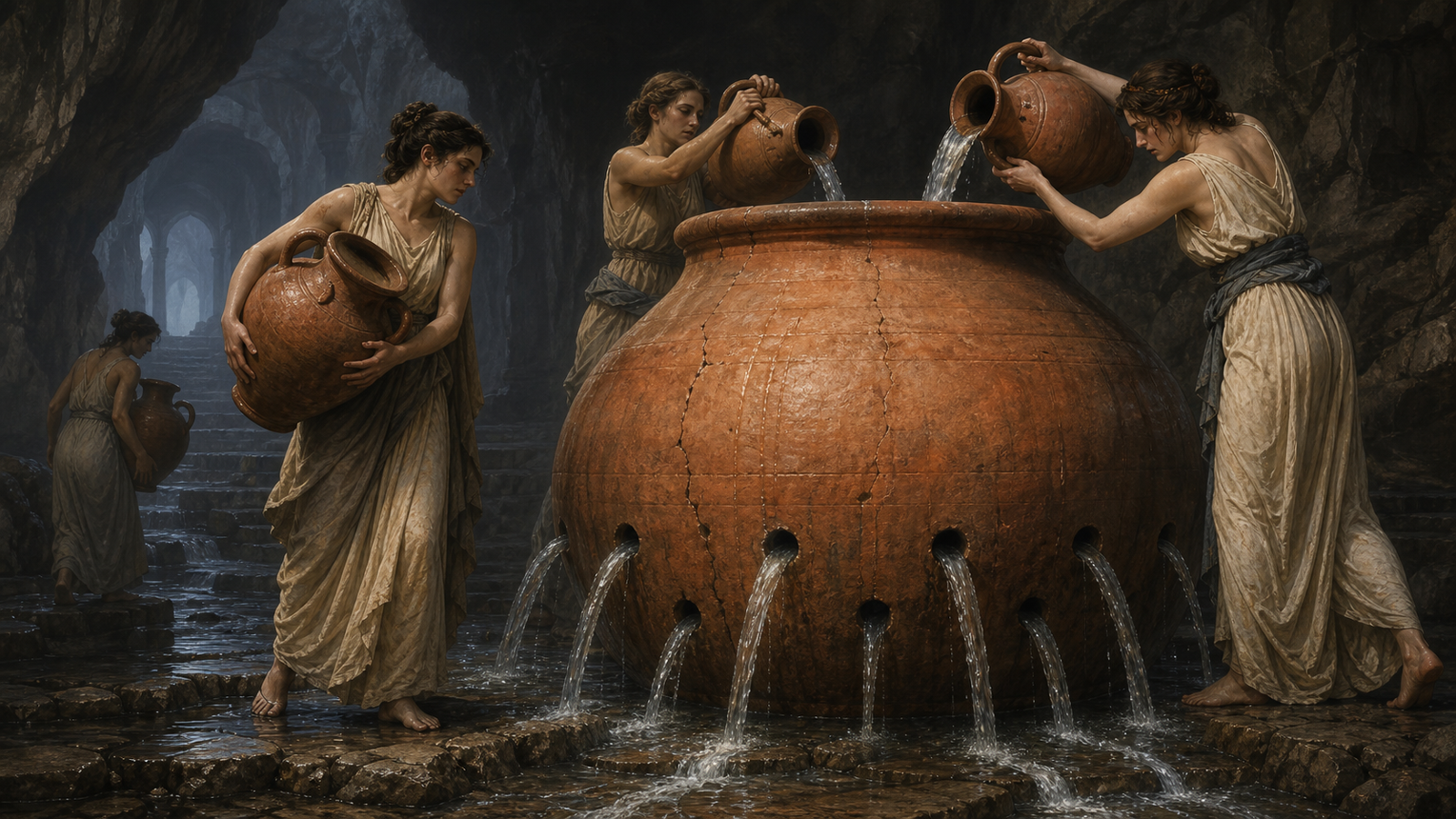
of those who eat much and are gluttonous. Transferred from the myth of the Danaids and the jar into which they pour the water they draw. For this jar is said to be in Hades, never to be filled; the souls of the uninitiated suffer about it; and certain maidens, whom they call the Danaids, fill broken vessels with water and carry it to that perforated jar. The proverb may also be applied to Hades itself, since though many are always dying, it is never filled. The reason the Danaids were condemned to this punishment is as follows. Aegyptus and Danaus, brothers, ruled the land of the Melampodes, which is now called Egypt. Danaus had fifty daughters, and Aegyptus fifty sons; Danaus, fearing the sons of Aegyptus, who quarreled with him about the rule, took up his daughters and came to Argos, and there settled. Later the sons of Aegyptus came to Danaus and urged him to put aside his enmity, and asked his daughters in marriage. He, still bearing a grudge over his exile, agreed to the marriages and assigned the maidens by lot. When he had drawn the lots for the marriages, he gave a feast and handed daggers to his daughters. They killed the bridegrooms in their sleep — except Hypermnestra, who saved Lynceus, since he had respected her virginity. For this reason the Danaids — except Hypermnestra — are said to have been condemned in Hades to draw water into a perforated jar.
Greek
Proverb
Ἄπληστος πίθος
Explanation
ἐπὶ τῶν πολλὰ ἐσθιόντων καὶ γαστριμαργούντων. Μετενήνεκται δὲ ἀπὸ τοῦ μύθου τοῦ περὶ τὰς Δαναΐδας, καὶ τοῦ πίθου εἰς ὃν ἀνιμῶσαι ὕδωρ βάλλουσι. Λέγεται γὰρ οὗτος ὁ πίθος ἐν Ἅιδου εἶναι οὐδέποτε πληρούμενος· πάσχουσι δὲ περὶ αὐτὸν αἱ τῶν ἀμυήτων ψυχαί· καὶ κόραι δέ, ἃς Λαναΐδας λέγουσιν, πληροῦσαι ἐν κατεαγόσιν ἀγγείοις ὕδωρ πρὸς αὐτὸν φέρουσι τετρημένον. Δύναται δὲ ἡ παροιμία καὶ ἐπ’ αὐτοῦ λέγεσθαι τοῦ Ἅιδου, ὅτι πολλῶν πάντοτε θνησκόντων οὐδέποτε πληροῦται.
Ἡ δὲ αἰτία, δι’ ἣν αἱ Δαναΐδες κατεκρίθησαν τὴν τιμωρίαν ταύτην, οὕτως ἔχει. Αἴγυπτος καὶ Δαναὸς ἀδελφοὶ ὄντες τῆς τῶν Μελαμπόδων ἐκράτουν γῆς, ἥτις νῦν Αἴγυπτος καλεῖται. Σχόντος δὲ Δαναοῦ θυγατέρας πεντήκοντα, καὶ Αἰγύπτου υἱοὺς πεντήκοντα, Δαναὸς τοὺς παῖδας τοῦ Αἰγύπτου δεδοικὼς στασιάσαντας περὶ τῆς ἀρχῆς, ἀναλαβόμενος τὰς θυγατέρας εἰς Ἄργος ἀφίκετο, κἀκεῖ κατῴκισεν. Ὕστερον δὲ οἱ τοῦ Αἰγύπτου παῖδες πρὸς Δαναὸν ἐλθόντες, τῆς τε ἔχθρας παύσασθαι παρεκάλουν, καὶ τὰς θυγατέρας πρὸς γάμον λαβεῖν ἠξίουν. Ὁ δὲ μνησικακῶν αὐτοῦ περὶ τῆς φυγῆς, ὡμολόγει τοὺς γάμους καὶ διεκλήρου τὰς κόρας. Ὡς δὲ ἐκληρώσατο τοὺς γάμους, ἑστιάσας ἐγχειρίδια δίδωσι ταῖς θυγατράσιν. Αἱ δὲ κοιμωμένους τοὺς νυμφίους ἀπέκτειναν, πλὴν Ὑπερμνήστρας. Αὕτη γὰρ Λυγκέα διέσωσε, παρθένον αὐτὴν φυλάξαντα. Λέγεται οὖν διὰ τοῦτο τὰς Δαναΐδος, ἄνευ Ὑπερμνήστρας, ἐν Ἅιδου κατακριθῆναι εἰς τετρημένον πίθον ὕδωρ ἀντλεῖν.
urn:cts:greekLit:tlg0098.tlg001.1st1K-grc1:2.6